Apple shares fell nearly 5% on Wednesday after the company raised prices of several Mac and iPad models, becoming one of the latest consumer technology companies to pass on soaring memory and storage costs driven by the artificial intelligence boom.
The AAPL stock was down about 4.89% at the time of writing.
The price increases mark Apple’s first formal move to pass higher component costs directly on to consumers after Chief Executive Tim Cook said the spike in memory prices had become impossible to absorb.
“The consumer electronics industry is facing an unprecedented challenge,” Apple said in a statement.
“The rapid expansion of AI data centers has created an extraordinary surge in demand for memory and storage. We have never seen a component price increase this much, this quickly.”
The company added that it had “reached a point where we need to begin raising prices on a number of products,” while leaving open the possibility of further increases.
“We know this is not welcome news, and we are working tirelessly to find solutions,” it said.
Macs and iPads see immediate price increases
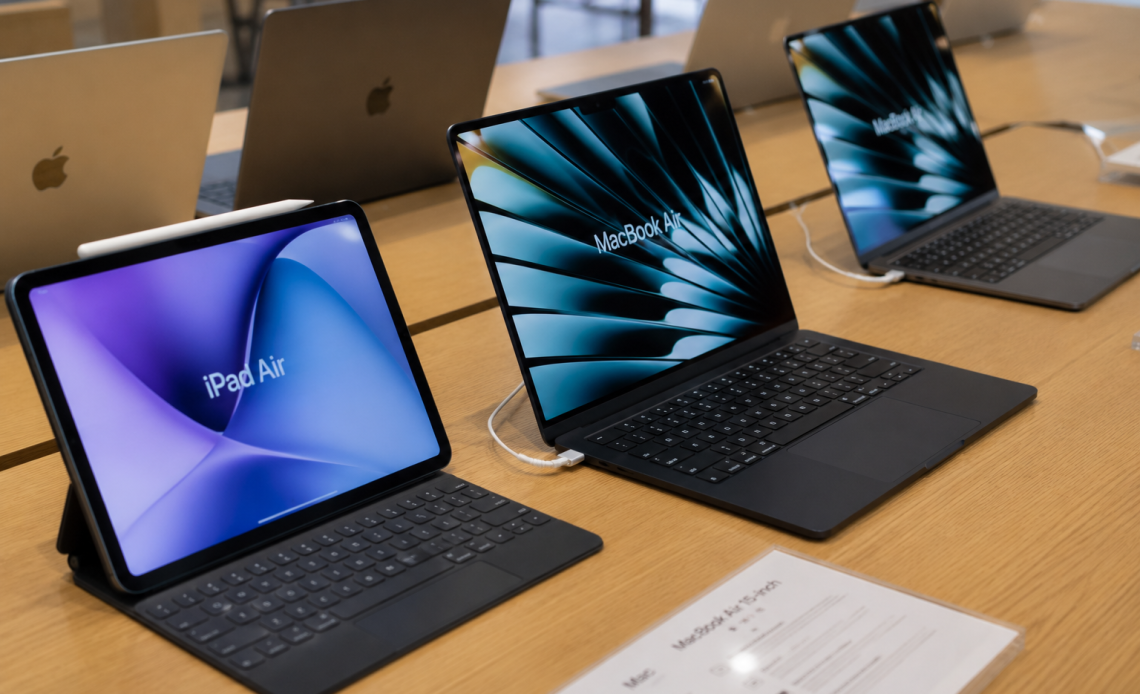
Under the revised pricing structure, the base MacBook Air now costs $1,299, an increase of $200.
The base MacBook Pro has risen by $300 to $1,999, while the entry-level MacBook Neo now starts at $699, up by $100.
The iPad lineup has also become more expensive.
The iPad Air price has increased by $150 to $749, while the iPad Pro now starts at $1,199, up by $200.
Apple has so far left iPhone prices unchanged.
Cook had signalled the move last week, telling The Wall Street Journal that the company could no longer fully shield customers from surging component costs linked to artificial intelligence infrastructure.
“This is a hundred-year flood,” Cook told the Journal. “I’ve never seen anything like it in any area in over 40 years.”
AI demand reshapes the memory market
The explosive growth of artificial intelligence has transformed the global memory market.
According to Counterpoint Research, memory and storage prices have quadrupled over the past three quarters as suppliers increasingly divert production toward high-bandwidth memory used in AI servers and accelerators.
Memory manufacturers such as Micron have prioritised orders from AI chipmakers, including Nvidia, helping drive record profits but leaving limited supply available for consumer electronics companies.
Apple now joins a growing list of electronics manufacturers increasing prices due to memory shortages.
Dell, HP, Lenovo, and Asus have all flagged price increases this year, while Samsung raised the prices of two versions of its S26 smartphone in the United States by $100.
Investors question Apple’s ability to offset costs
The rapid increase in memory prices has raised questions about how Apple, the world’s most valuable consumer electronics company, can manage mounting component expenses without hurting demand.
Investors had hoped Apple’s scale and bargaining power would help it negotiate better terms with suppliers or offset costs through greater vertical integration.
The global DRAM market is dominated by Micron and South Korean firms SK Hynix and Samsung, all of which have surpassed $1 trillion in market value this year as they benefit from unprecedented demand for AI infrastructure from technology giants such as Google, Meta and Amazon.
Apple has also explored sourcing memory from Chinese suppliers YMTC and CXMT.
However, those efforts have encountered resistance from US policymakers, including Secretary of State Marco Rubio, over security concerns.
A recent Morgan Stanley report described the situation as “chipflation,” estimating that memory prices have increased sixfold over the past year and warning that building additional manufacturing capacity could take years.
JPMorgan analysts estimate that DRAM and NAND memory, which currently account for roughly 10% to 15% of the bill of materials for an iPhone, could represent more than 45% by 2027.
Apple had warned in April that existing inventories had allowed it to maintain margins above Wall Street expectations, but said rising memory costs would eventually begin weighing on profitability by the end of June.
Despite the growing cost pressures, Apple’s hardware business remained highly profitable in the March quarter.
The company expanded hardware gross margins to 38.7% from 35.9% a year earlier and reported total quarterly profit of $29.6 billion.
The post Apple stock falls as memory shortage forces company to hike Mac and iPad prices appeared first on Invezz