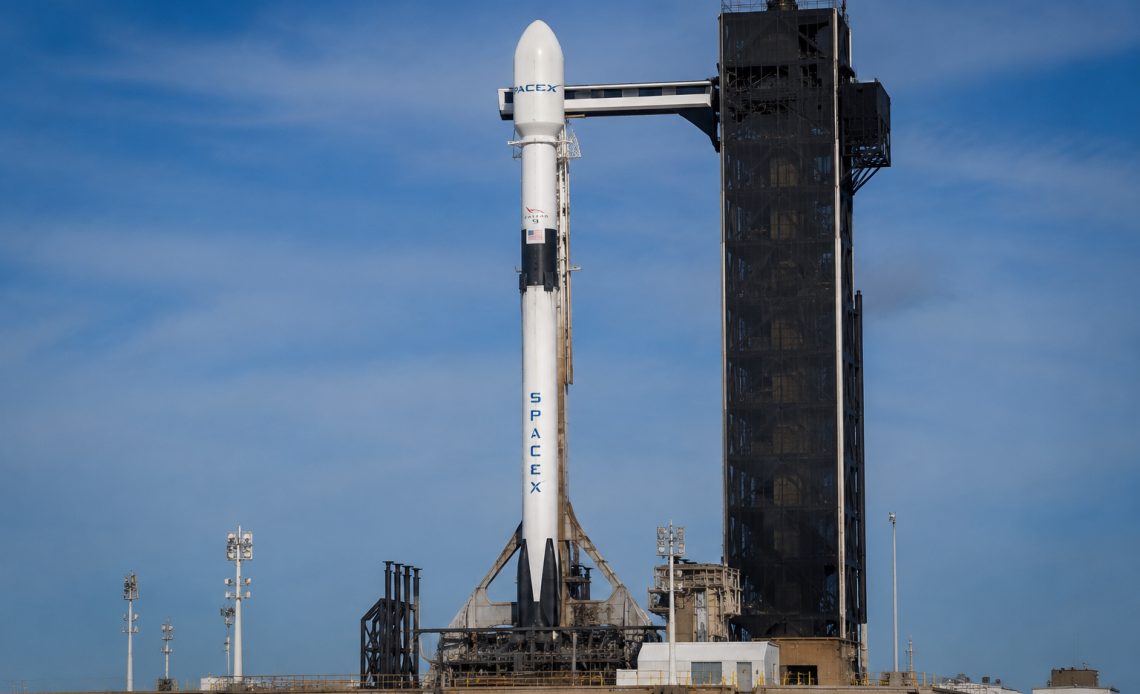
SpaceX shares fell sharply on Wednesday, cooling some of the enthusiasm that had propelled Elon Musk’s aerospace and technology company to become one of the world’s most valuable firms within days of its stock market debut.
The SPCX stock was down 5.5% at $190.80 by late morning trading, trimming gains after a spectacular run that had seen shares surge roughly 50% above their $135 initial public offering price.
The rally had briefly pushed SpaceX past both Amazon and Microsoft in market capitalization rankings earlier this week.
At Tuesday’s close, the company was valued at approximately $2.7 trillion, making it one of the largest publicly traded companies in the world.
“We’re running out of superlatives to describe retail enthusiasm for SpaceX. SPCX has now topped the leaderboard as the most bought stock by retail investors for 3 consecutive sessions, with yesterday’s $144.6 million of net buying surpassing the first two days of trading,” Vanda Research said in a note published Wednesday.
“In total, retail investors have bought $369.8 million of SPCX over the last 3 sessions. To put that into perspective, retail bought just $100 million of QQQ [Nasdaq ETF] and $88.2 million of NVDA over the same period.”
While investors continue to bet on Musk’s ability to deliver long-term growth through businesses spanning rockets, satellite internet, and artificial intelligence, some analysts are beginning to question whether the stock’s valuation has become detached from underlying fundamentals.
Bubble concerns emerge
SpaceX’s rapid ascent has reignited debate over whether parts of the technology sector are entering bubble territory.
The company reported a net loss of $4.9 billion in 2025 and lost another $4.3 billion during the first quarter of 2026, figures that stand in stark contrast to its soaring market value.
Swissquote senior market analyst Ipek Ozkardeskaya said on Wednesday the stock’s post-IPO performance may be an indication that investor enthusiasm has outpaced reality.
“SpaceX is perhaps the biggest red flag that today’s technology rally is reaching a point where valuations no longer make sense,” Ozkardeskaya said.
The warning came as technology stocks continue to benefit from investor optimism surrounding artificial intelligence, despite concerns over whether earnings growth can justify current valuations.
Options frenzy fuels momentum
Investor appetite for SpaceX has also been evident in the derivatives market.
Nearly one million SpaceX call options changed hands on Tuesday, making it the fifth-most actively traded options stock in the market.
The volume placed SpaceX alongside some of Wall Street’s most heavily traded securities, including Nvidia, Tesla, the Invesco QQQ Trust, and the SPDR S&P 500 ETF.
Call options, which allow investors to profit from rising stock prices, dominated trading activity and reflected continued bullish sentiment.
Analysts pointed to several aggressive trades involving thousands of July call contracts with strike prices well above current trading levels, suggesting some investors remain convinced that the stock can climb significantly higher.
Limited supply supports shares
One factor helping sustain demand has been the limited number of shares available for trading.
Only 555.6 million shares were sold in last week’s IPO, representing about 5% of SpaceX’s outstanding stock.
An additional 83.3 million shares could enter the market through the underwriters’ overallotment option.
According to Morningstar, roughly 911 million insider shares—about twice the current public float—will become eligible for sale shortly after the company’s first earnings report, which is not expected until early August.
For now, insider selling remains restricted, while many institutional investors who participated in the IPO appear reluctant to part with their holdings.
The scarcity of shares has helped fuel buying interest, particularly ahead of the company’s inclusion in the Nasdaq-100, FTSE Russell, and MSCI indexes over the coming weeks.
George Karamanos of Rothschild & Co. said passive fund flows could continue supporting the stock once index additions take effect.
“Share price momentum is likely to be underpinned by passive fund flows that reflect household savings trends and asset allocation decisions dependent on thematic fundamentals rather than stock-specific ones,” Karamanos wrote in a note to clients.
The risk of a post-IPO hangover
Despite the strong demand, some market observers have cautioned that newly listed stocks often struggle to maintain their early momentum.
Analysts at Renaissance Macro Research refer to this phenomenon as a “hype tax,” where intense media attention and investor enthusiasm drive prices higher initially before performance fades.
“Despite the enthusiasm, performance often disappointed: from the opening trade, the median one-year return was -15.6%, with only 8 of 20 IPOs posting gains after a year,” analysts led by Jeff deGraaf wrote in a recent analysis.
With valuation concerns growing, options activity surging, and a major insider lockup expiration approaching, analysts say investors should prepare for continued volatility as SpaceX settles into life as a public company.
The post SpaceX slips after blockbuster IPO rally: is hype catching up with fundamentals? appeared first on Invezz